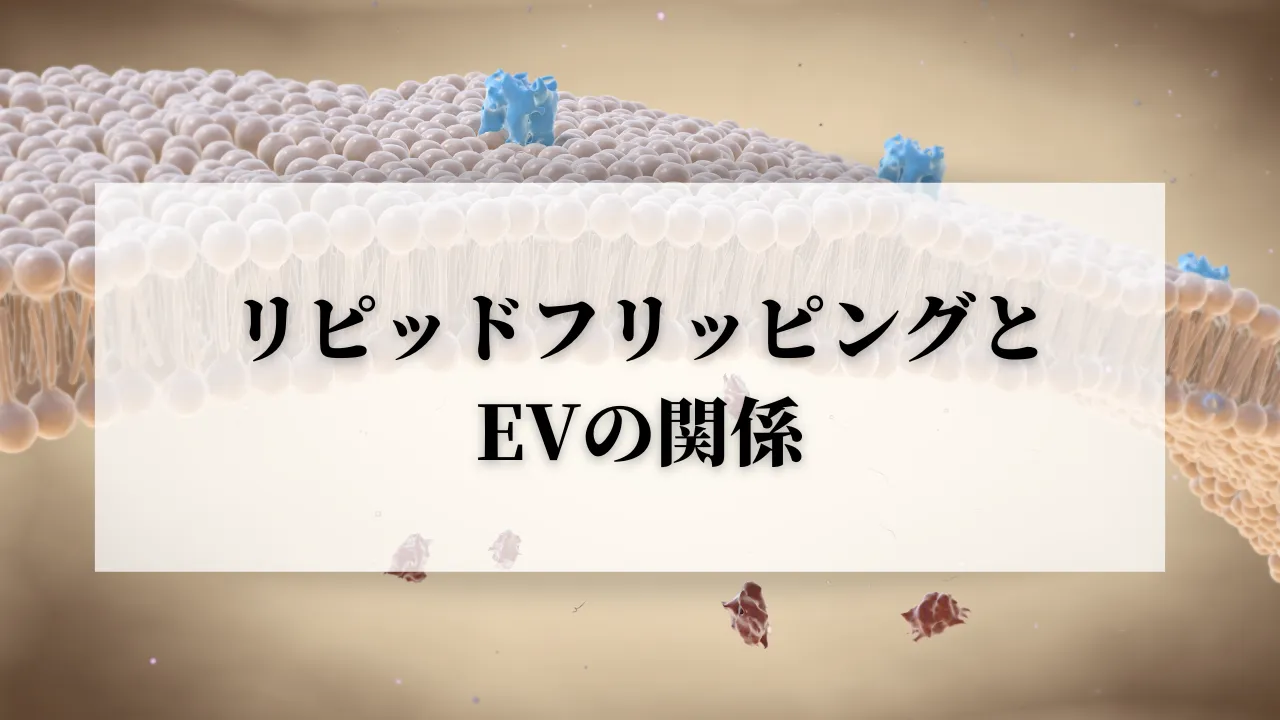
“Lipid flipping” refers to the movement of lipid molecules from one leaflet (half) of a biological membrane to the other. This process, also called “flip-flop” or transmembrane movement, is usually slow and energetically unfavorable because the polar head group of the lipid must pass through the hydrophobic core of the membrane. Nevertheless, it is important for the proper function and maintenance of the cell membrane. Several proteins called flippases, floppases, and scramblases promote lipid flipping and maintain the asymmetric distribution of lipids between the two leaflets of the bilayer.
What Is a Polar Head Group?
The “polar head group” refers to a part of a lipid molecule. A lipid molecule generally consists of two main parts: a polar (water-soluble) head group and a non-polar (poorly water-soluble) tail.
The polar head group is the part through which a lipid interacts with the aqueous environment, and this is why lipids naturally form a bilayer. In this structure, the polar head groups are in contact with water, while the non-polar tails are directed inward, avoiding contact with water. This is the basic structure of biological membranes.
What Is Lipid Asymmetric Distribution?
“Lipid asymmetric distribution” refers to the state in which lipid molecules are not uniformly distributed across the two sides of a cell membrane (the two leaflets that make up the membrane) in living organisms.
The cell membrane consists of a phospholipid bilayer, and its inner and outer leaflets each have a different lipid composition. This allows the cell membrane to carry out specific functions. For example, because the inner leaflet of the cell contains many negatively charged lipids, it can attract positively charged proteins inside the cell.
This asymmetry is maintained by specific proteins (flippases, floppases, and scramblases). These proteins promote the “flip-flop” of lipids and help move lipids between the leaflets.
How Is Flip-Flop Related to EVs?
Extracellular vesicles (EVs) are tiny membrane sacs secreted by cells, and they play an important role in cell-to-cell communication. The flip-flop of lipids is involved in the formation and release of these EVs.
In particular, during apoptosis (programmed cell death), certain lipids (for example, phosphatidylserine) flip-flop from the inner side of the cell membrane to the outer side. This signals to the surroundings that the cell is undergoing apoptosis. Some of these lipids also appear on the surface of the extracellular vesicles formed during apoptosis.
In addition, membrane curvature and cell membrane asymmetry play important roles in the generation and release of EVs. The flip-flop of lipids maintains the lipid asymmetry of the cell membrane, which supports the formation of EVs. For this reason, it can be said that the flip-flop of lipids and the formation of EVs are closely related.
Why Is Asymmetry Important?
The lipid asymmetry of the cell membrane is important for supporting the following key biological functions.
- Physical properties of the membrane: The asymmetric distribution of lipids determines the physical properties of the cell membrane (fluidity, tension, curvature, etc.). These properties are important for the cell membrane to function normally.
- Cell signaling: Lipid asymmetry plays an important role in signal transduction within the cell and between cells. For example, during apoptosis (programmed cell death), a lipid called phosphatidylserine moves from the inner side to the outer side of the cell membrane, becoming a signal that tells other cells that the cell is dying.
- Cell shape and movement: Lipid asymmetry is important for maintaining the shape of the cell and for the cell to move.
- Transport and uptake: Certain nutrients and signaling molecules are taken into the cell via specific lipids. Lipid asymmetry regulates this process.
For these reasons, the lipid asymmetry of the cell membrane is extremely important for maintaining biological functions.
When EVs are released, does phosphatidylserine flipping always occur?
The flipping of phosphatidylserine (PS) (movement from the inner side to the outer side) is often seen in specific situations, especially during apoptosis (programmed cell death), but it does not accompany all extracellular vesicle (EV) release.
The formation and release of EVs depend greatly on the cell type, its state, and the surrounding environment. Some EVs (especially those involving apoptosis) are labeled by the exposure of PS on the outer side of the cell membrane. However, many other EVs, especially a type of EV called the exosome, do not require such exposure of PS.
Therefore, the flipping of phosphatidylserine is often associated with the release of EVs, but it does not necessarily occur in all EV release.
Is the release of exosomes related to lipid flipping?
The exosome is a specific type of extracellular vesicle (EV) released from a structure called the multivesicular body (MVB) formed inside the cell. The MVB is derived from an intracellular structure called the endosome, and it contains small vesicles that become exosomes. When the MVB fuses with the cell membrane, these small vesicles are released outside the cell as exosomes.
Lipid flipping refers to the phenomenon in which certain lipids move from one layer of the cell membrane to the other. This produces lipid asymmetry, which affects the physical properties of the cell membrane, cell signal transduction, and so on.
Whether lipid flipping is directly involved in the release of exosomes is not yet completely clear. However, lipid asymmetry may indirectly affect the fusion of the MVB with the cell membrane and the release of exosomes by controlling the curvature of the cell membrane. In addition, signals produced by the flipping of specific lipids may also regulate the release of exosomes.
What Signals Are Involved in Flipping and Exosome Release?
The specific signals involved in lipid flipping and exosome release have not yet been completely elucidated, but several possibilities have been proposed.
- Phosphatidylserine (PS) flipping: PS is usually located in the inner leaflet of the cell membrane, but under specific conditions (for example, apoptosis or activation) it moves to the outer leaflet. This functions as an “eat-me” signal and may trigger the release of exosomes.
- Protein-mediated signals: Specific proteins (for example, flippins or floppins) regulate the flip-flop of lipids, and through this the generation and release of exosomes may be affected.
- Activation of signal transduction pathways: Many biological stimuli, such as cellular stress, inflammation, and cell activation, activate signal transduction pathways inside the cell. These signals regulate the redistribution of lipids (including flipping) and may promote the generation and release of exosomes. For example, specific molecules such as Rho-family GTPases, combinases, and the Rab family regulate the release of exosomes.
- Calcium signaling: Calcium ions regulate many cellular processes, and changes in their levels may regulate lipid flipping and the release of exosomes.
- Because these signals affect the physical properties of the cell membrane, the physiological state of the cell, and the intracellular and extracellular environments, they are thought to be indirectly involved in the release of exosomes. However, the detailed mechanisms of these processes are not yet completely understood, and research is ongoing.