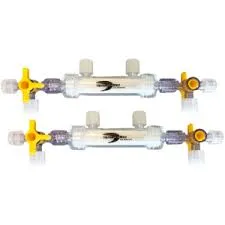
Tangential Flow Filtration (TFF) is a type of filtration process in which the fluid flows along the surface of the filter membrane. This contrasts with “dead-end filtration” or “normal filtration,” where the liquid flows onto the membrane and passes straight through it.
The main advantage of Tangential Flow Filtration is that it can minimize membrane clogging (commonly called “membrane fouling”) even during long periods of continuous operation. Because the liquid flows along the surface of the membrane, clogging is less likely and highly efficient filtration is possible.
Tangential Flow Filtration is widely used in many industries, including biotechnology, food and beverage manufacturing, and pharmaceutical production. It is especially useful for concentrating, purifying, and separating biological materials composed of proteins, nucleic acids, bacteria, viruses, and other microorganisms.
To isolate and purify exosomes from cell samples or body fluids (such as blood and urine), a highly selective method is required. One of the techniques used for this purpose is Tangential Flow Filtration (TFF).
TFF performs separation based on the size and shape of small vesicles such as exosomes. This makes it possible to selectively separate and concentrate exosomes away from other unwanted components (for example, proteins and lipids).
Compared with other methods for purifying exosomes, TFF has the advantage of being easy to scale up and of being able to process relatively large quantities of exosomes in a short time. These characteristics make it especially suitable for the clinical application of exosomes and for large-scale research projects.