Tag
3 #neuroplasticity
Clinical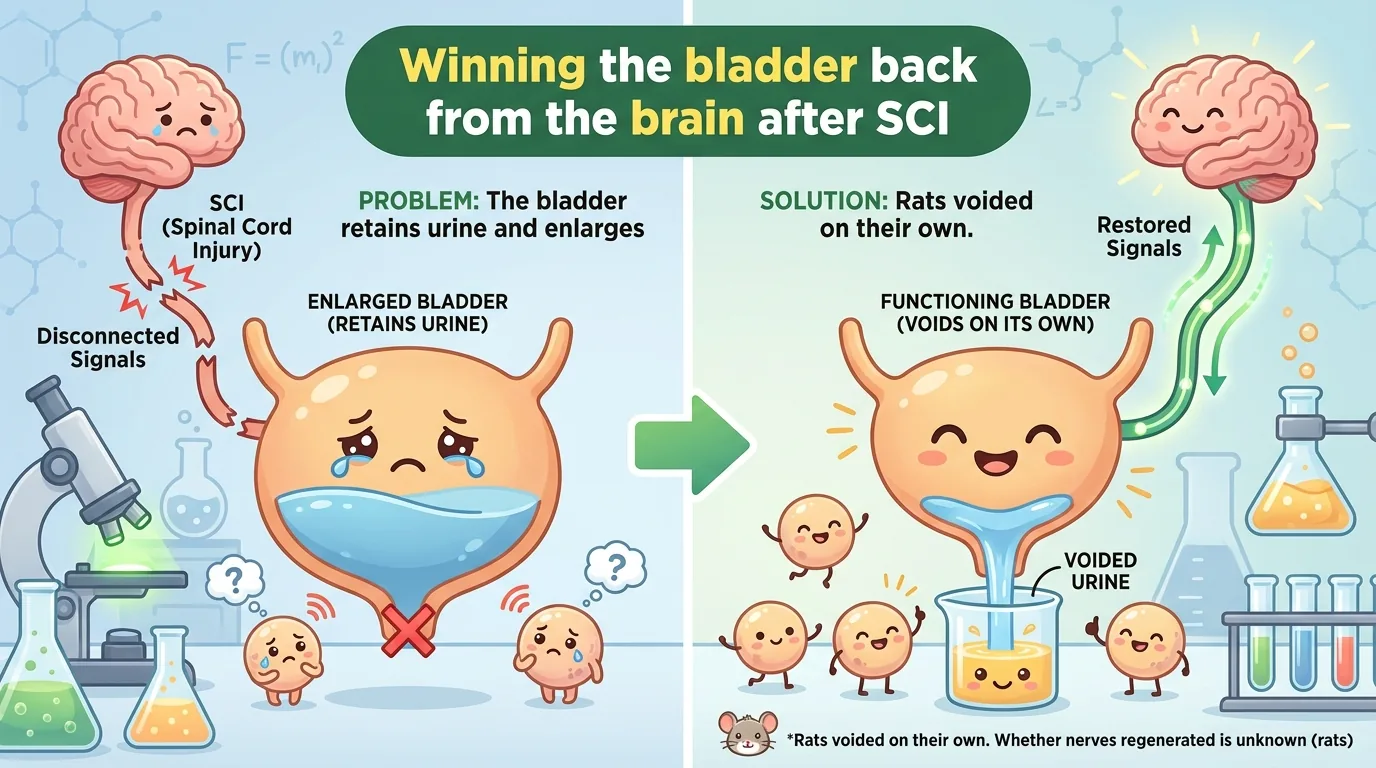
2026-07-27
Can the Brain Reclaim a Bladder That Won’t Move After Spinal Cord Injury? — What the Anti-RGMa Antibody Elezanumab Showed in Rats
Neurogenic bladder afflicts more than 80% of people with spinal cord injury. A careful reading of a preclinical study reporting that the anti-RGMa antibody elezanumab improved voiding function and neuroplasticity in rats. Efficacy in humans has not yet been shown.
解説を読む →
Neuroscience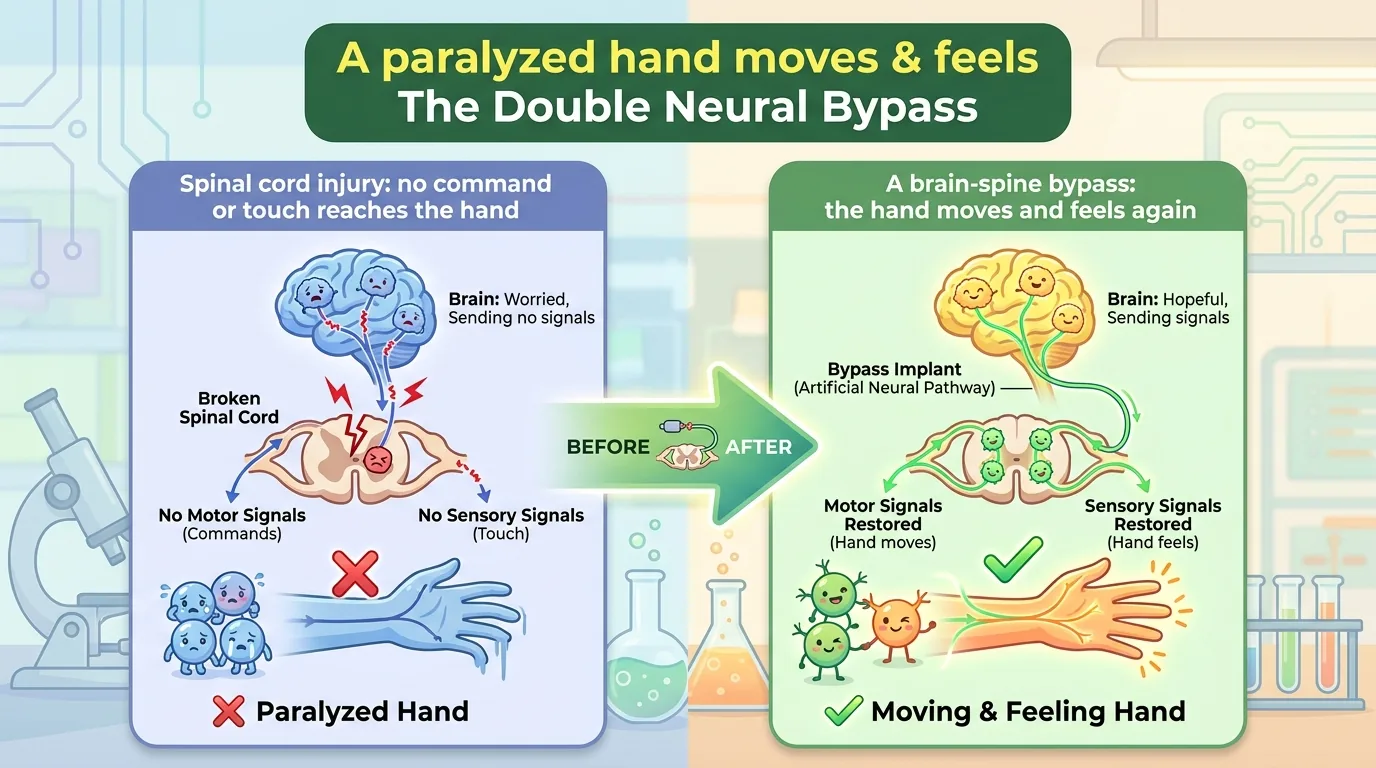
2026-07-21
Move Your Own Hand by Thought Alone, and Feel It Touch: A 'Double Neural Bypass' Takes On Complete Spinal Cord Injury
A man paralyzed from the neck down can now move his own hand by thought alone and even feel the texture of what he grips. A team at the Feinstein Institutes for Medical Research has developed a 'double neural bypass (DNB)' that bridges the brain to the spinal cord and cortex at the same time. While the device is on, it takes over hand movement and touch (assist); through electrical-stimulation training it also drew out recovery that persists even after the device is switched off (therapy). Cracking an egg without breaking it, feeding himself, feeling a dog's fur again through a once-paralyzed wrist—Dr. Exotaro unpacks this landmark first-in-human study.
解説を読む →
Neuroscience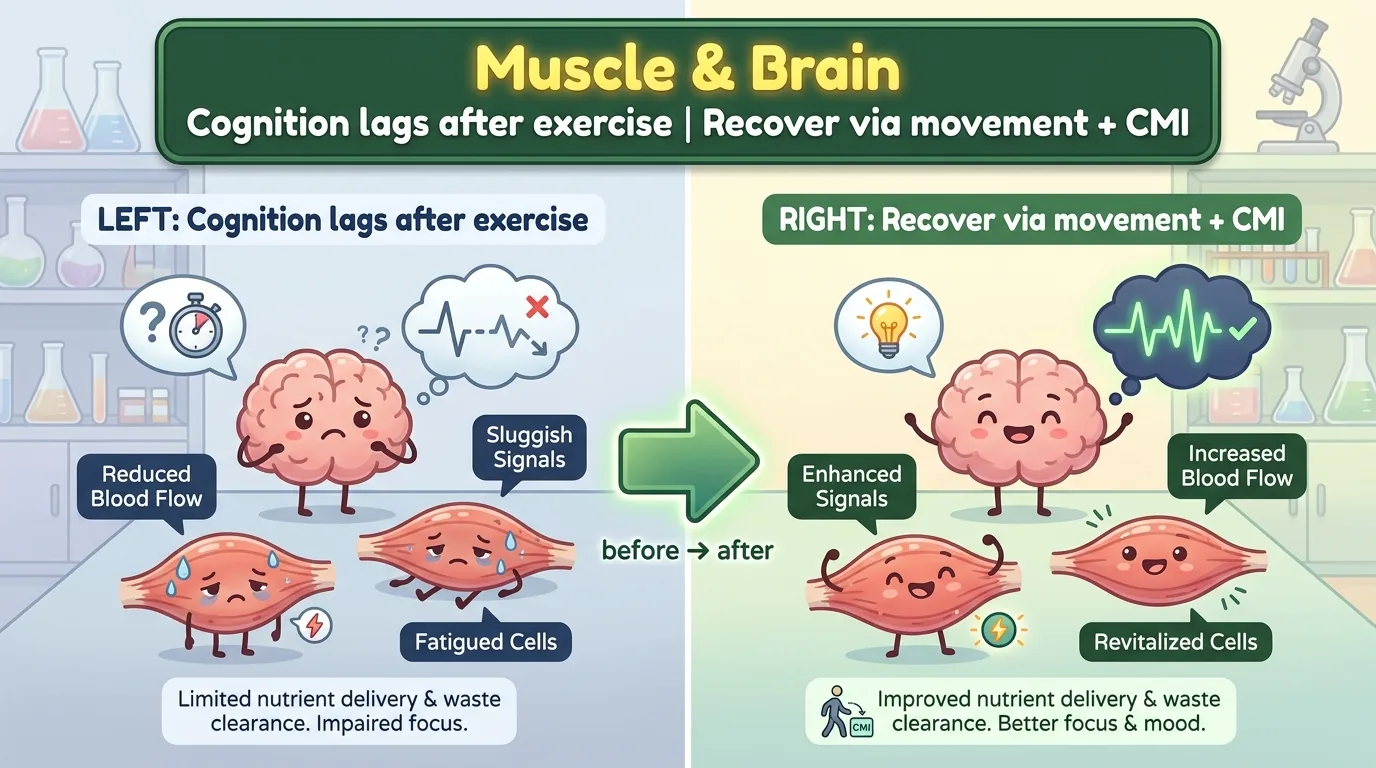
2026-07-12
Rewiring the Link Between "Muscle" and "Brain"—Cognitive-Motor Integration (CMI), the Key to Reclaiming Cognition Through Exercise in Neurological Disease
Exercise reaches the brain through peripheral signals—BDNF, lactate, immune and vascular messengers. But a biomarker "moving" is not the same as cognition returning. An Italian neurorehabilitation team offers an integrative model: the biological effects of exercise become clinically meaningful only when they couple to attention-demanding movement and surface as a behavior called cognitive-motor integration (CMI). Exotaro unpacks a review that surveys the differences across stroke, Parkinson's, MS, and TBI, and how to deploy VR, robots, and wearables.
解説を読む →