Tag
8 #spinal cord injury
Neuroscience
2026-10-11
The Original Wiring May Not Be Essential—in Repairing Spinal Cord Injury, the Question Is "When" to Combine Biology and Engineering
Unless the severed wiring is reconnected exactly as it was, there can be no recovery from spinal cord injury—decades of research have been shaking this premise. Biology that grows and guides; engineering that wakes dormant circuits and trains them. A 2019 review in Nature Medicine lays these two toolboxes side by side and argues that combinations should be designed not as simple addition but around the interactions between mechanisms and their timing. Dr. Exotaro reads it, adding what has happened since, up to 2026.
解説を読む →
Stem Cell
2026-09-16
Stem Cells Given by IV to Rats Whose Spinal Cords Were Cut in Two Places—at the Upper Lesion a Detour Formed to the Outside, at the Lower One a Different Route Crossed to the Other Side
Rats had their spinal cords hemisected at two separated levels—the right side at T7 and the left side at T12—and received a single intravenous dose of bone-marrow-derived mesenchymal stem cells the day after injury. At 28 days the motor score was 12.2 versus 5.4. The nerve pathways drawn from nine hours of 7-tesla MRI on the excised cords had built a detour to the outside at the rostral lesion. At the caudal lesion, however, what stood out was not a lateral detour but a route crossing the midline to the opposite side. Dr. Exotaro reads a preclinical study.
解説を読む →
MSC Exosome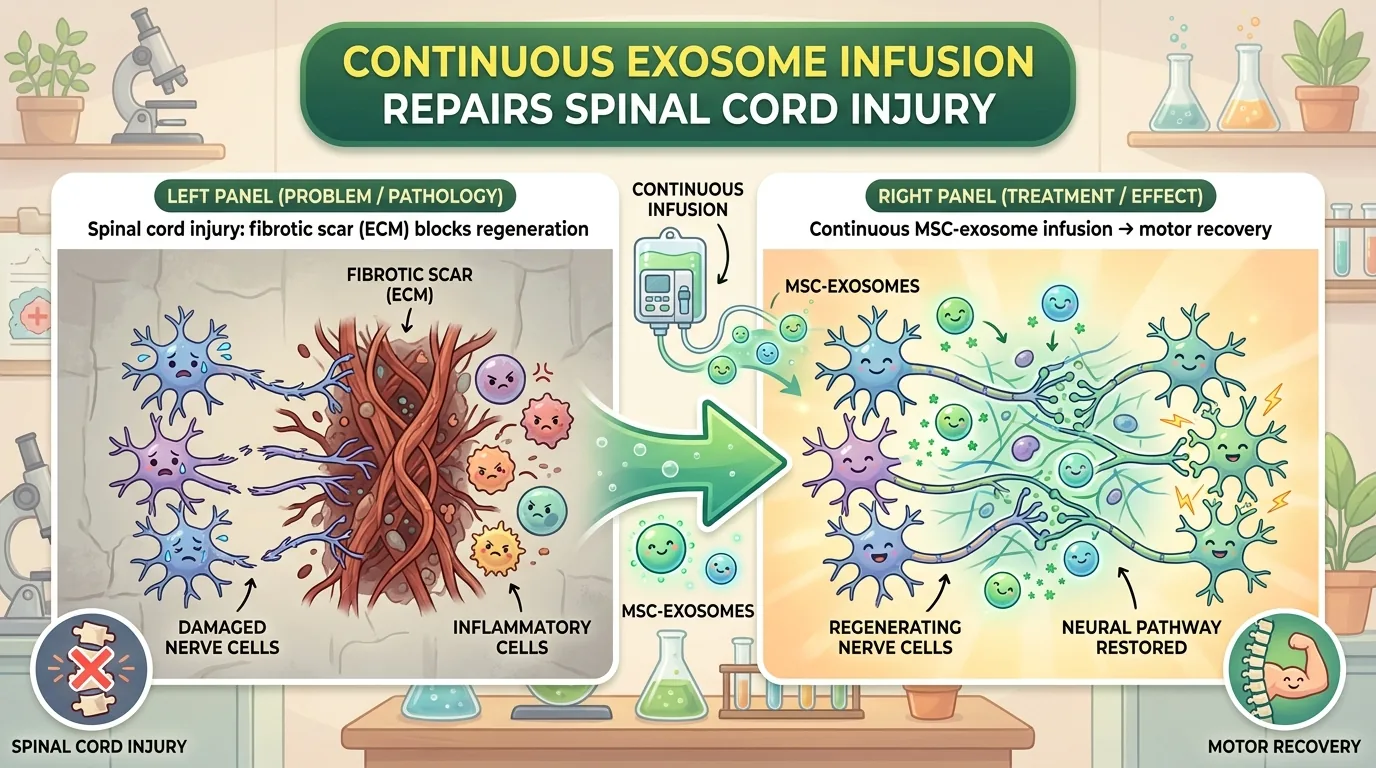
2026-09-16
Doubling the Injected Dose Did Not Improve Recovery — In Spinal Cord–Injured Rats, What Was Deciding Whether the Exosomes Worked
Small extracellular vesicles (sEVs) from human bone marrow MSCs, delivered to spinal cord–injured rats either as daily injections or as a continuous infusion from an osmotic pump. At the same total dose of 9.2 μg, only the group infused continuously for six days climbed to a BBB score of 12.9±0.9, while the same amount split into six injections stalled at 8.6±0.9. Doubling the injected dose changed nothing against the three-day schedule, and collagen 1 at the lesion was also significantly lower under continuous infusion than under injections of the same total amount. Dr. Exotaro reads a preclinical rat study.
解説を読む →
MSC Exosome
2026-09-09
Taking On Spinal Cord Injury With Vesicles Released by Stem Cells From Discarded Teeth — But the Molecule Cast as the Active Ingredient Was a Part of the Cell's “Garbage Disposal Plant”
Extracted wisdom teeth and baby teeth—this paper takes on spinal cord injury with exosomes from stem cells harvested from teeth that would normally be thrown away. The authors compared 3 kinds of stem cells on the same footing and chose dental pulp, narrowed 727 proteins down to a candidate called PSMD1, a “part of the proteasome,” and report that it tipped microglia toward the M2 side. But the treatment was tried only in cultured cells and mice. Dr. Exotaro reads through this preclinical study.
解説を読む →
Clinical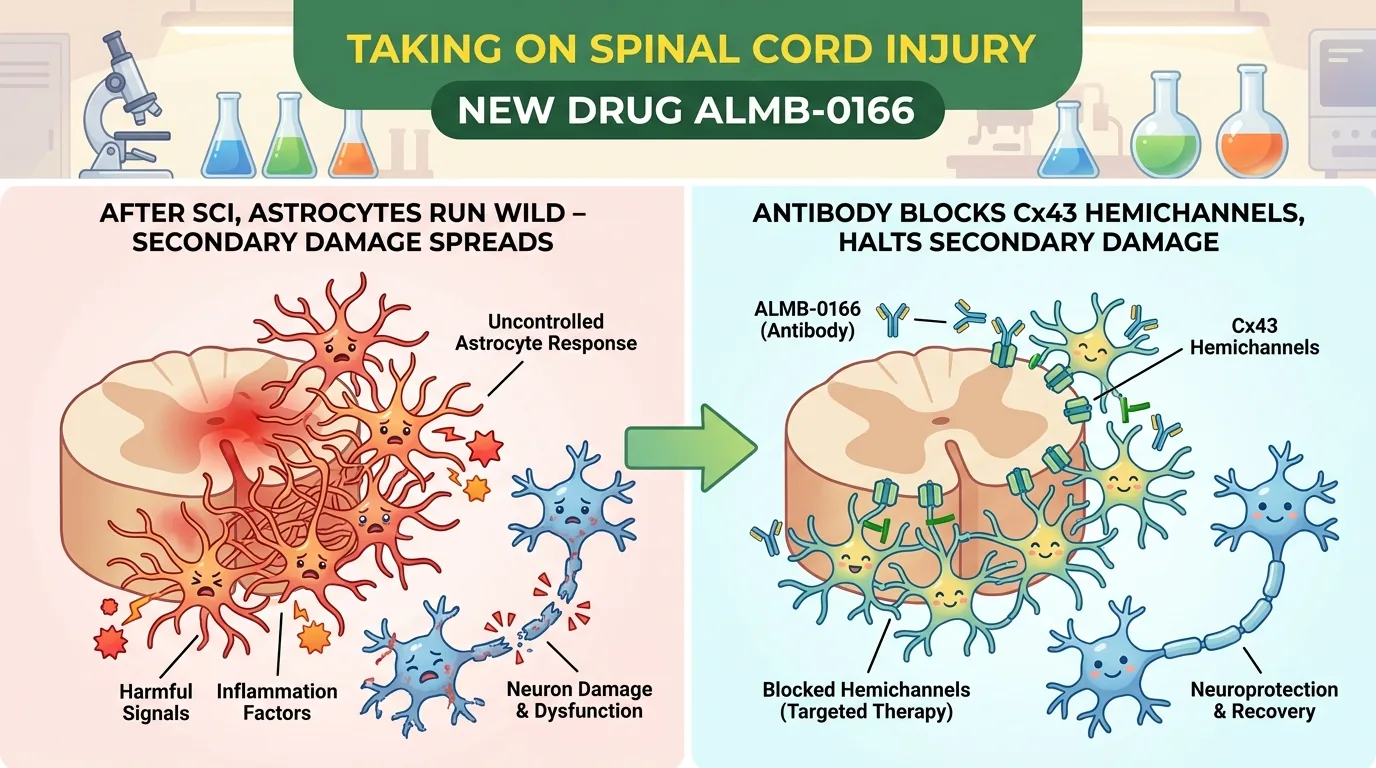
2026-08-01
Antibody ALMB-0166 Calms Overactive Astrocytes — Safety and Early Signals from a First-in-Human Trial in Spinal Cord Injury
ALMB-0166, the first Cx43-hemichannel antibody, given as a single dose to 24 SCI patients: adverse events matched placebo, 1200/2400mg improved scores, two reached AIS E. A small, exploratory result.
解説を読む →
Clinical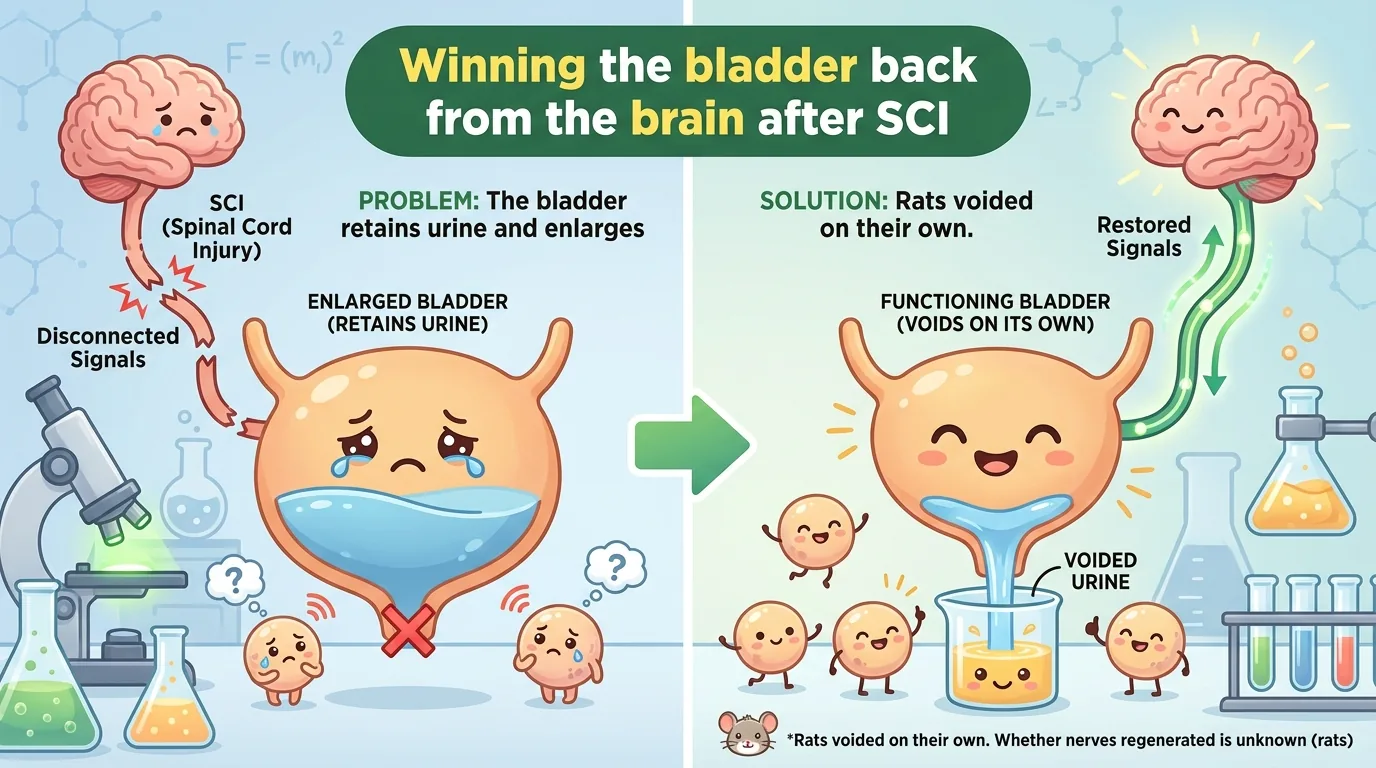
2026-07-27
Can the Brain Reclaim a Bladder That Won’t Move After Spinal Cord Injury? — What the Anti-RGMa Antibody Elezanumab Showed in Rats
Neurogenic bladder afflicts more than 80% of people with spinal cord injury. A careful reading of a preclinical study reporting that the anti-RGMa antibody elezanumab improved voiding function and neuroplasticity in rats. Efficacy in humans has not yet been shown.
解説を読む →
Neuroscience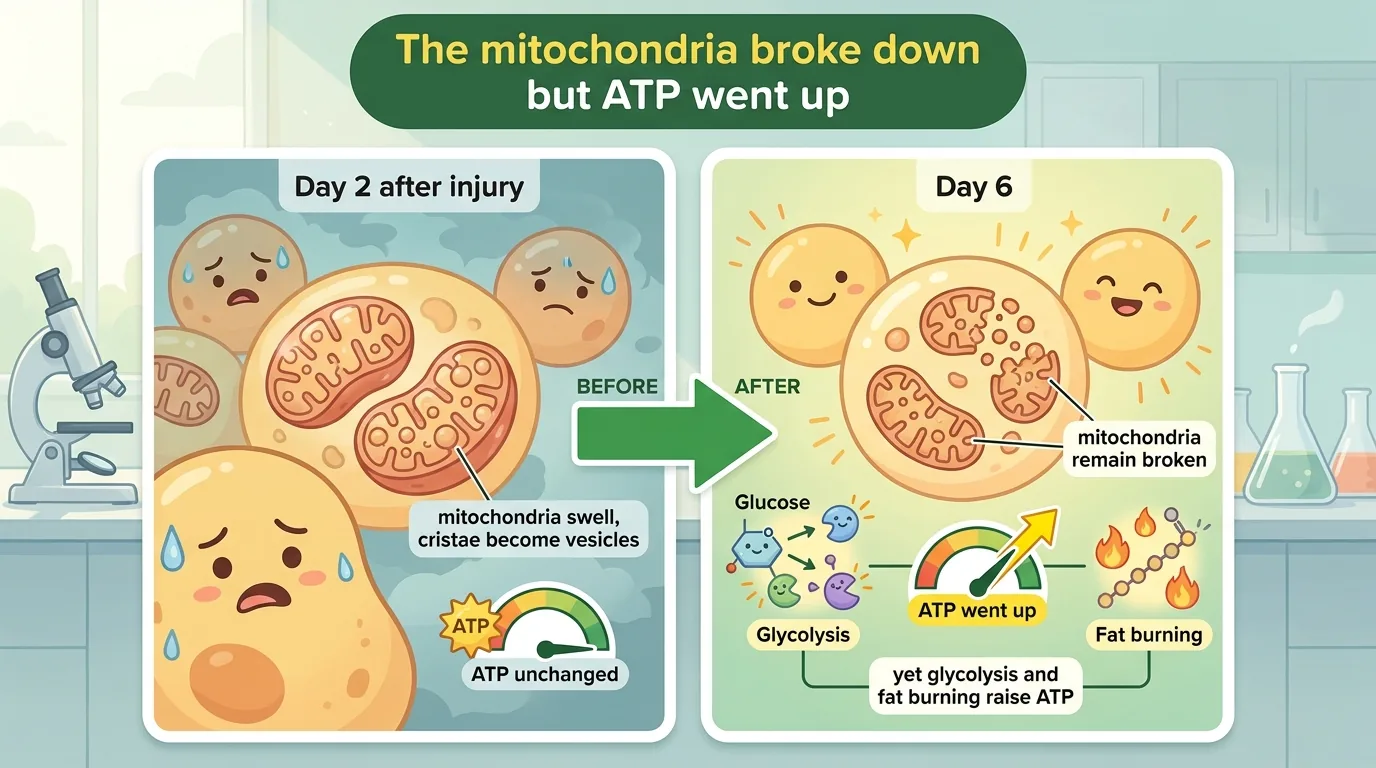
2026-07-25
The Mitochondria Were Broken, Yet ATP Went Up — What Was Happening in the Spinal Cord of a Frog That Cannot Regenerate
A tadpole whose spinal cord is severed will regenerate; after metamorphosis, the same frog cannot, and its response closely resembles that of humans. In Chile, Dr. Slater and colleagues showed that on the non-regenerating side, mitochondria swell by day 6 after injury, cristae turn into vesicles, and the respiratory enzyme COX shuts down. Yet ATP did not fall — it rose. Genes for glycolysis and genes that mobilize fat were both switched on. That said, the extra ATP may simply have leaked out of damaged tissue. Dr. Exotaro reads this preclinical frog study.
解説を読む →
Neuroscience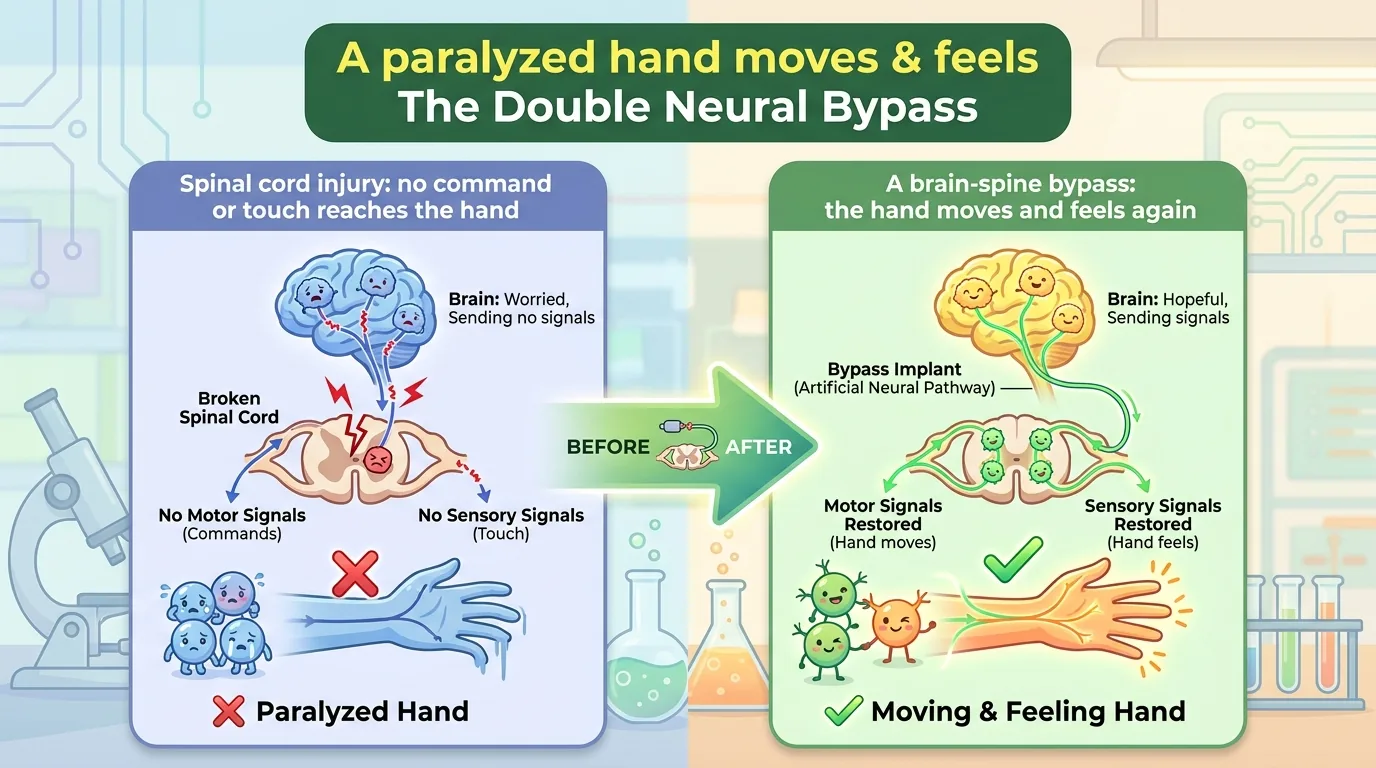
2026-07-21
Move Your Own Hand by Thought Alone, and Feel It Touch: A 'Double Neural Bypass' Takes On Complete Spinal Cord Injury
A man paralyzed from the neck down can now move his own hand by thought alone and even feel the texture of what he grips. A team at the Feinstein Institutes for Medical Research has developed a 'double neural bypass (DNB)' that bridges the brain to the spinal cord and cortex at the same time. While the device is on, it takes over hand movement and touch (assist); through electrical-stimulation training it also drew out recovery that persists even after the device is switched off (therapy). Cracking an egg without breaking it, feeding himself, feeling a dog's fur again through a once-paralyzed wrist—Dr. Exotaro unpacks this landmark first-in-human study.
解説を読む →